Mullein, elderberry, thyme and peppermint have soothed coughs for generations, and one of them holds up well in modern trials. Breathe puts six of them in a dropper you can use three times a day. Here is what they realistically do for a seasonal cough, what they cannot do, the current pricing, and the refund detail hidden in the official FAQ.
Check Today’s Price See Packages

Mullein, thyme and peppermint have long respiratory use.
Dropper, taken 2–3 times daily.
FDA-registered, GMP facility per the seller.
No autoship or subscription.
Two things before anything else. Breathe is not a replacement for inhalers, steroids or any asthma or COPD treatment — some promotion suggests it is, and that advice is dangerous. And the refund terms need reading carefully: the page headline says 180 days, but its own FAQ says refund requests must come within 90 days, minus shipping. We treat 90 days as the real deadline.
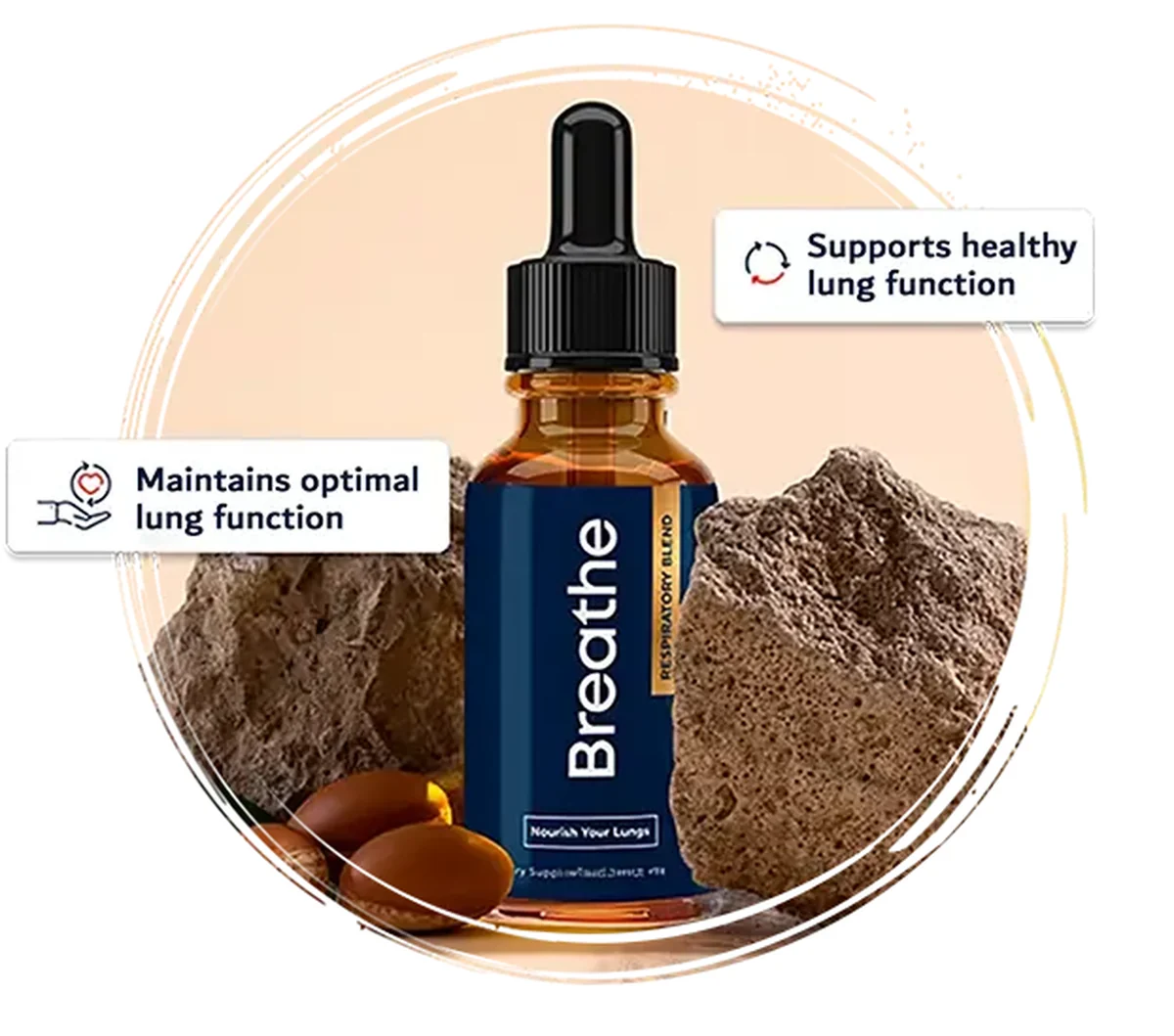
Breathe is a liquid herbal blend in a 2 fl oz dropper bottle. The official directions are 2–3 mL, two to three times a day. It's sold through ClickBank with a one-time payment.
The formula centres on mullein, a traditional expectorant herb, with elderberry, peppermint, echinacea, manuka honey and thyme. Several promotional pages also mention ginger and lemon peel; the full label isn't printed as text on the order page, so check the bottle.
Here's the honest picture. These are sensible herbs for seasonal respiratory comfort — a cold, a cough, a scratchy throat. Elderberry in particular has a meta-analysis showing it shortened upper respiratory symptoms. What they are not is a treatment for chronic lung disease, and the sales page's promise to “clear 2.6 lbs of lung mucus fast” isn't something any study supports.
| Product type | Herbal respiratory supplement (liquid) |
| Bottle | 2 fl oz (60 mL) |
| Directions | 2–3 mL, 2–3 times daily |
| Key herbs | Mullein, elderberry, peppermint, echinacea, manuka honey, thyme |
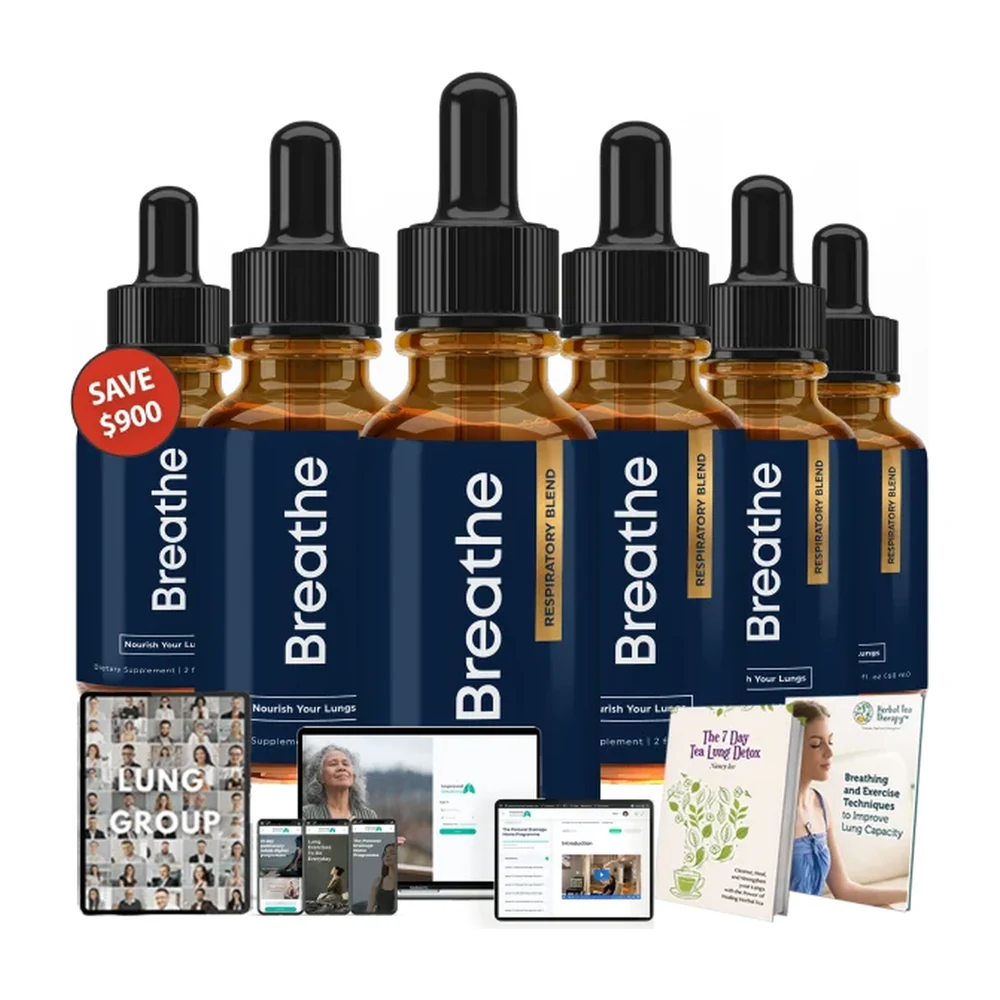
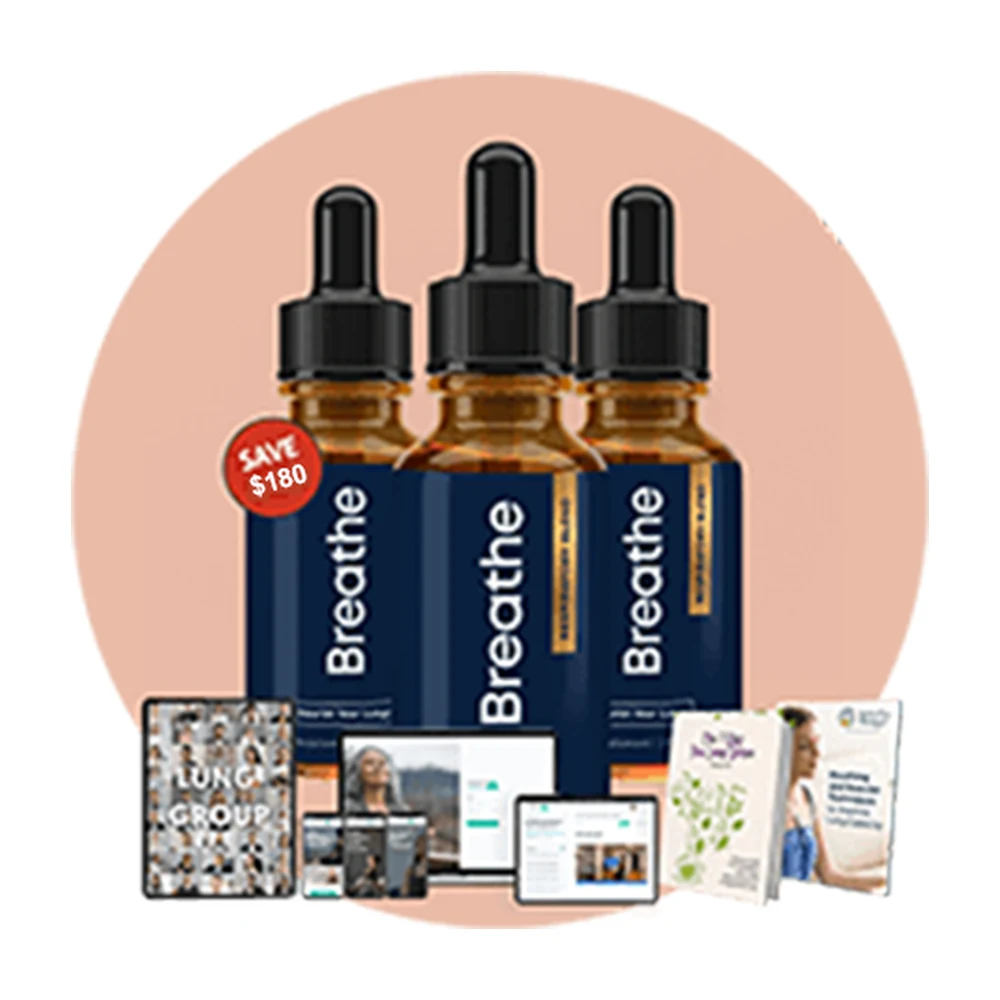
| Price | $69 (1) · $177 (3) · $294 (6) |
| Refunds | Within 90 days per FAQ, minus S&H |
Prices from the live order page. One-time payments; free shipping on 3 and 6 bottles, and the six-bottle order adds digital bonuses.

Prices and bonuses shown were listed on the official order page when this page was last reviewed and are set by the seller. Confirm the package, total, shipping and the 90-day refund terms on the final order screen before paying.
Three traditional roles, one with genuinely good modern evidence.
Mullein and thyme are traditional expectorants, used to make a cough more productive. Thyme preparations are approved in parts of Europe for bronchitis symptoms; mullein's modern trial evidence is much thinner.
Elderberry is the best-evidenced ingredient here: a meta-analysis of four randomised trials in 180 people found it shortened upper respiratory symptoms, more clearly for flu than for colds. Echinacea's own record is mixed.
Peppermint's menthol creates a cooling sense of clearer airways, and a Cochrane review found honey probably eases coughing and the sleep it disturbs. That comfort is real even when the infection is unchanged.
The herbs, with the evidence separated from the marketing.
Black elderberry reduced the duration and severity of upper respiratory symptoms in a meta-analysis of randomised trials. The effect was stronger for flu than for colds, and the trials were small. The strongest ingredient here. The trials pooled in that analysis were small, and the elderberry products used were commercial preparations whose doses were not always reported — so while the direction of the result is encouraging, the precise amount you would need is not established.
Used for centuries for coughs. Laboratory work shows anti-inflammatory and antimicrobial activity; good human trials are lacking. Mullein's traditional preparation is a tea or tincture rather than a capsule, and a liquid extract is at least true to that tradition. It has a long safety record, though people with sensitive skin occasionally react to the plant's fine hairs.
Thyme is used in approved cough preparations in parts of Europe for bronchitis symptoms. A reasonable inclusion. Thyme's active compound thymol has antibacterial activity in laboratory work, and European herbal monographs support thyme preparations for cough. It is one of the more defensible inclusions here.
Menthol creates a feeling of clearer breathing by acting on cold receptors — it doesn't actually open the airways. That distinction matters for anyone with asthma: feeling like your airways are more open is not the same as your airways actually opening, and menthol should never replace a reliever inhaler.
Studies on preventing or shortening colds are mixed. Avoid if you have ragweed allergies or autoimmune conditions. Echinacea should also be avoided by anyone taking immunosuppressant medication, and by people with autoimmune conditions, because it acts on immune signalling.
Honey soothes coughs. Note: not suitable for infants under one. Manuka honey specifically has been studied for antibacterial activity in laboratory settings, though the cough evidence applies to honey generally rather than to any particular variety.
Realistic possibilities — none demonstrated with the finished product. “Clears pounds of mucus” is deliberately absent.
Elderberry's meta-analysis is the best evidence on this label. Elderberry is the ingredient doing the real work in this formula.
Peppermint gives a cooling, clearer sensation. Most noticeable in the first minutes after a dose, when the menthol hits.
Honey and thyme soothe an irritated throat. A Cochrane review found honey probably reduces how much a cough disturbs sleep.
Drops in water or directly, a few times a day. Liquid drops suit anyone who struggles with capsules or tablets.
Long-used botanicals in one bottle. Six traditional herbs in one bottle rather than six separate purchases.
$49 a bottle with free shipping. Six months of supply at the lowest per-bottle price the seller offers.
Buyer reports cluster around seasonal colds and throat comfort; people with chronic lung disease report little change.
“I use it when I feel a cold coming on. My throat feels better and the colds seem shorter, which fits what I've read about elderberry. It's not magic and it tastes strongly herbal. I keep a bottle in the cupboard the way my mother kept honey and lemon, and I use it the same way — when something is coming on, not every day of the year. Used like that it feels like decent value.”
Karen B., 54 — Oregon
“I have COPD and hoped this would help. It didn't change my breathing. My pulmonologist was clear I should never cut back my inhalers for a supplement, and he's right. I would also say the sales page did me no favours by promising to clear pounds of mucus. Setting expectations that high just makes a reasonable herbal product look like a failure.”
Tom H., 69 — Kentucky
“Good for the scratchy-throat stage of a cold. Watch the refund terms — the page says 180 days but the FAQ says 90. I'd go by 90. The taste takes some getting used to — strongly herbal and a bit bitter — but a few drops in warm water with honey makes it perfectly pleasant.”
Sarah M., 41 — Texas
Testimonials are illustrative and not typical. Individual results vary, and no outcome is guaranteed.
About $1.63 a day on the six-bottle package, with free shipping.
One-time payment · No subscription · Secure checkout
The sales page advertises a 180-day money-back guarantee, but the official FAQ states refunds must be requested within 90 days, minus shipping and handling, on your most recent order. We use 90 days as the safe deadline.
Keep your order confirmation email — it carries the order number the refund process runs on — and remember that anything bought through a marketplace listing sits outside this guarantee entirely.
If you do request a refund, do it through the seller's contact page rather than ClickBank's, and keep your order number to hand. The safest approach is to decide within the first two or three months of use — long before either the advertised window or the FAQ's shorter one becomes an issue.
Inhalers, steroids and prescribed COPD or asthma treatment must not be reduced for any supplement. Breathlessness, chest pain or coughing blood need urgent care.
Echinacea can affect people with ragweed allergies or autoimmune conditions; ask a pharmacist if you take immunosuppressants.
Confirm the refund terms on the order screen and keep your confirmation.
Whatever the headline says, the FAQ's 90-day limit is the one to plan around.
Breathe is sold through the official website only. Listings under the name on Amazon, Walmart or eBay are unauthorised resellers or counterfeits, outside the 90-day guarantee.
A marketplace listing priced far below the official six-bottle price is old stock, a knock-off or someone's returns — and you have no way to tell which by looking at it.
Secure your Breathe package while the current pricing holds. Official website only, one-time payment, free shipping on multi-bottle orders.

Breathe is a liquid herbal respiratory blend in a 2 fl oz dropper bottle, built around mullein, elderberry, peppermint, echinacea, manuka honey and thyme. It's sold through ClickBank as a one-time purchase. The bottle holds 2 fl oz, which at the recommended two to three doses a day works out to roughly a month per bottle.
The finished product hasn't been tested. Elderberry has the best evidence: a meta-analysis of four randomised trials found it substantially reduced upper respiratory symptoms, especially from flu. The other herbs are traditional with thinner evidence. Expect seasonal comfort, not lung repair. Think of it as belonging to the same category as honey and lemon for a winter cough: genuinely soothing, traditionally used, and not a medicine.
No. Some promotional pages describe it as a natural alternative to respiratory medication — that is dangerous advice. Never reduce prescribed treatment for a supplement. This matters most for people who already have a lung condition, because a cold that would be a nuisance to someone else can turn into an exacerbation for them — which is a reason to be more careful with treatment, not less.
Both appear. The headline says 180 days; the official FAQ says refund requests must be made within 90 days, minus shipping and handling, on your most recent order. Plan around 90. Keep a screenshot of the refund terms as they appeared on the day you ordered, since sales pages change and the FAQ is the document that governs the transaction.
Mullein, elderberry, peppermint, echinacea, manuka honey and thyme are the core; some promotional material also lists ginger and lemon peel. The order page doesn't print the full label as text, so check the bottle. The full supplement facts panel on the bottle is the definitive list, and it is worth reading before your first dose if you have plant allergies.
From the live order page: one bottle is $69 plus $9.99 shipping; three bottles are $177 ($59 each) with free shipping; six bottles are $294 ($49 each) with free shipping and digital bonuses. Shipping is only charged on the single-bottle package, which makes the three-bottle tier better value than the per-bottle prices alone suggest.
The official directions are 2–3 mL, two to three times a day, directly or in water. Taking it in a little warm water with honey makes the taste considerably easier, and it does not reduce the effect.
Generally well tolerated. Avoid echinacea if you have ragweed allergies or autoimmune conditions, and don't give honey-containing products to infants under one. People with ragweed or daisy-family allergies should be particularly careful, since echinacea belongs to that family.
No — no dietary supplement is FDA approved. Supplements are regulated as food, which is precisely why marketing claims in this category go unchecked and why the burden of scepticism falls on the buyer.
From the official website, where the pricing and refund terms apply. Keep your order confirmation. Buying direct is also the only way the refund terms apply to your order at all.
It can make a cough feel more productive, which is what traditional expectorant herbs do — but the marketing claim about clearing “2.6 lbs of lung mucus” isn't supported by anything. For context, healthy lungs produce roughly 100 mL of mucus a day and clear it automatically. If you're producing large amounts of phlegm, or it's discoloured or bloody, that's a reason to see a doctor rather than buy drops.
As an addition to proper treatment, possibly — for seasonal colds, which hit harder when you have chronic lung disease. As a replacement for your treatment, absolutely not, and some promotion around this product implies otherwise. Inhaled bronchodilators and steroids work on mechanisms no herb replicates. Show the bottle to your respiratory nurse or doctor before adding it, particularly if you take theophylline or oral steroids.
Real, verifiable PubMed records covering ingredients in this formula. None tested Breathe itself.
Regular Price: $119/per bottleToday: $49/per bottle
On the 6-bottle package · About $1.63 a day · Free shipping · Refunds within 90 days
Get Your Discount NowOne-time payment · No subscription · 90-day money-back guarantee
The four things that decide it, side by side.
Elderberry has meta-analysis support for cold and flu symptoms. Four randomised trials, and the effect was clearest against flu.
Mullein and thyme are long-used cough herbs with thin modern trials. Tradition is a reason to try something, not proof that it works.
180 days advertised, 90 days in the FAQ, minus shipping. Plan around 90 days and you will not be caught out.
Not an asthma or COPD treatment — never cut back an inhaler. A cold is a nuisance; an exacerbation is an emergency. Keep your treatment.
The verdict — 4.8/5: if you want traditional herbal support for seasonal colds and throat comfort, Breathe is a reasonable choice — elderberry carries real evidence. It is not a treatment for chronic lung disease, and the “clear pounds of mucus” claim isn't supported. At $49 a bottle on the six-pack, plan around the FAQ's 90-day refund window rather than the advertised 180.